
An orchestration layer for geospatial processing

Standardise how geospatial data pipelines are built, executed, and monitored. So your internal teams maintain control, observability, and repeatability through a managed workflow layer.

A single system for production-ready geospatial pipelines

Replace fragile scripts and manual handoffs with managed workflows.

Pipeline orchestration

Connect existing processing tools or deploy new ones into a managed execution flow.

Dependency management

Handle execution order and interdependencies across processing steps.

Monitoring and observability

Track workflow execution, status, and failures in a controlled environment.

Failure recovery

Ensure processing can resume or recover without manual intervention.

Scalable execution

Run pipelines across missions, sensors, and customers without rewriting logic.

Repeatable outcomes

Standardise processing to ensure consistent results across teams and deployments.

How it works in practice

Turn fragmented processing into a managed pipeline.

Ingest

Raw imagery and inputs enter a defined workflow rather than being passed manually between teams.

Orchestrate

Execution order, dependencies, and processing logic are managed centrally instead of through brittle scripts.

Monitor

Workflows are tracked in real time, providing visibility into status and failures.

Recover

Failures are handled through managed recovery mechanisms rather than manual troubleshooting.

Built with your requirements in mind

✓ Enterprise grade security
✓ Audit ready by design
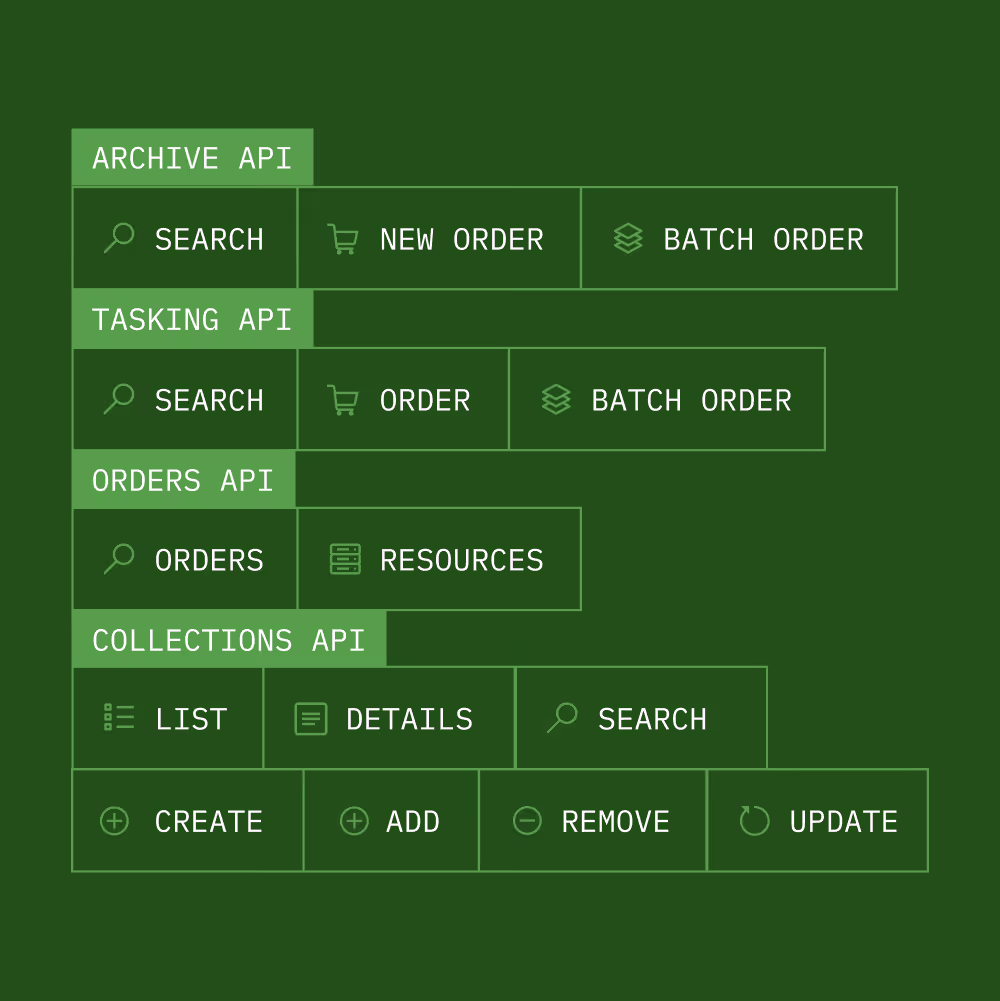
✓ API first architecture
✓ Modular by design
✓ Vendor neutral infrastructure
✓ Public or private cloud
✓ Standards based interoperability
✓ Granular access control
✓ Licensing aware
✓ Enterprise grade security
✓ Audit ready by design
✓ API first architecture
✓ Modular by design
✓ Vendor neutral infrastructure
✓ Public or private cloud
✓ Standards based interoperability
✓ Granular access control
✓ Licensing aware

Built for scale

Manual processing pipelines do not scale across growing constellations, increasing sensor volume, or expanding customer demand.

Automation Workflows remove human bottlenecks and ensure geospatial processing is repeatable, auditable, and production-ready.

Reduced time to output

Shorten the path from data capture to analysis-ready results.

Operational resilience

Replace fragile scripts with managed workflows.

Cross-team consistency

Ensure consistent processing across missions and deployments.

Scalable execution

Run pipelines across multiple sensors and customers without rewriting systems.

Live and maintained in weeks, not months

Adopt orchestration without rebuilding your entire stack.

Without Automation Workflows

Multiple disconnected steps

Request → Check

Imagery requested manually. Availability checked per provider. No unified view.

Order

Order placed separately per operator. Different interfaces, different rules, different people.

Track → Deliver

Progress tracked across disconnected systems. Data retrieved and routed manually.

Process

Processing steps run separately with inconsistent logic. No unified control or retry handling.

Manual coordination across every step. Delays, errors, and operational overhead at scale.

With Automation Workflows

Zero touch tasking

Trigger

An event or input triggers the workflow. No manual initiation required.

Execute

Provider selected and tasking placed automatically. No switching between APIs or portals.

Deliver

Data retrieved and routed to the right system without manual intervention.

Consistent execution

Every request follows the same process. Edge cases and retries handled automatically. Predictable outcomes regardless of provider.

No manual tasking. No switching between tools. Consistent delivery every time.

Most conversations start with understanding your current systems, workflows and constraints to see how Arlula can empower your team.